A family life
Orville Lincoln Sigafoos Sr.
1872–1911
A minister, writer and father whose short life took him from a Pennsylvania canal community to the pulpits of New York and New Jersey.
Explore the family tree →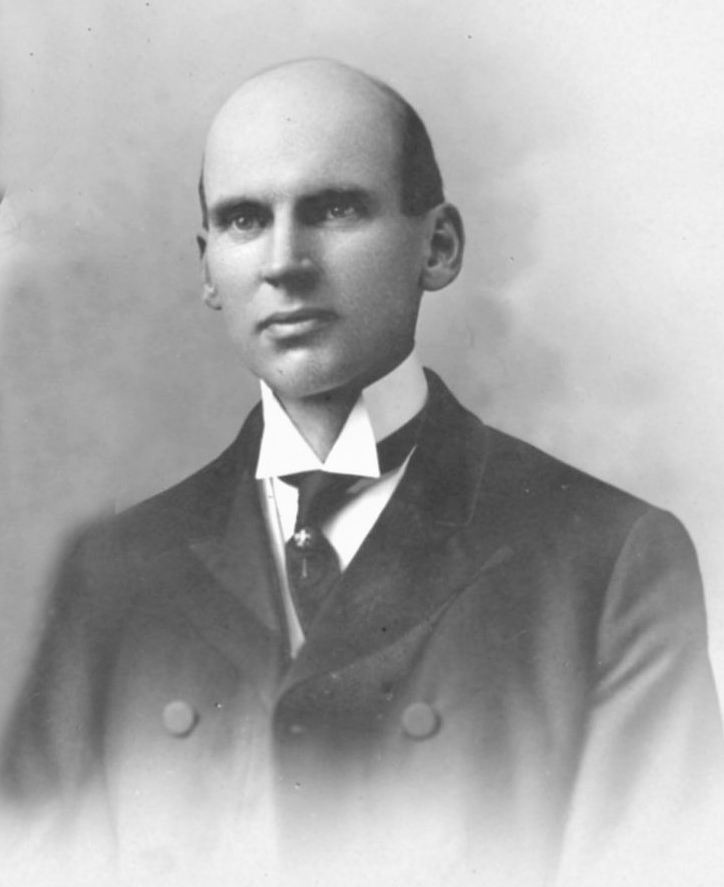
A childhood beside the canal
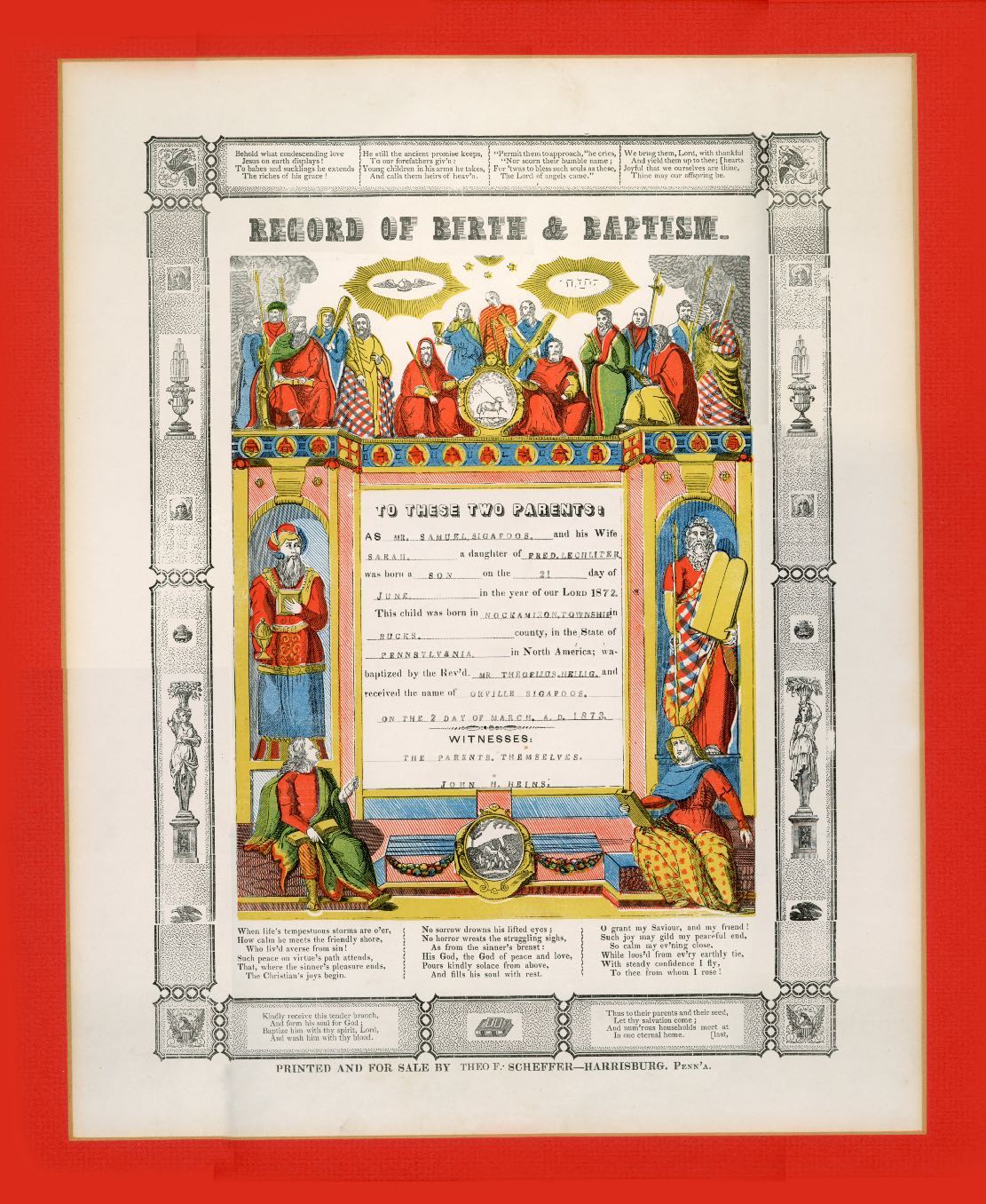
Orville Lincoln Sigafoos was born on June 21, 1872, in the Upper Black Eddy area of Bucks County, Pennsylvania. His colorful birth and baptism certificate names Nockamixon Township as his birthplace and records his baptism on March 2, 1873. His parents were Samuel Sigafoos Jr. and Sarah Lechleiter. [1] [2]
Dale Connelly’s research places the family in a community shaped by the Delaware Canal. Samuel worked as a canal boatman. Then, within a few years, Orville lost his mother, his infant sister Sarah, his father and his older sister Mary Alice. By early 1878, the immediate household into which he had been born was gone. [2]
His father’s sister, Mary Lippincott, cared for him. The court material Dale gathered distinguishes her daily care from the legal guardianship of John L. DuBois. It also shows the financial strain of bringing up a child: Mary’s affection and practical work were accompanied by negotiations over what Orville’s estate should contribute to his upkeep. [2]
The losses did not erase his affectionate memories. In a 1902 essay, Orville recalled riding beside his father and going to a Sunday-school picnic, where sweets were carefully handed out over several days. He remembered his father’s kindness in these words: [6]
His every word toward me was spoken and his every deed performed in gentle love.
The same essay has a playful side. He and a girl cousin pretended to vaccinate trees with a pocketknife, then built a makeshift carriage to imitate a local physician. When she deliberately tipped the carriage, the pretend doctor took a fall. The cousin’s name is not given in his account. [6]
A student with a gift for speaking
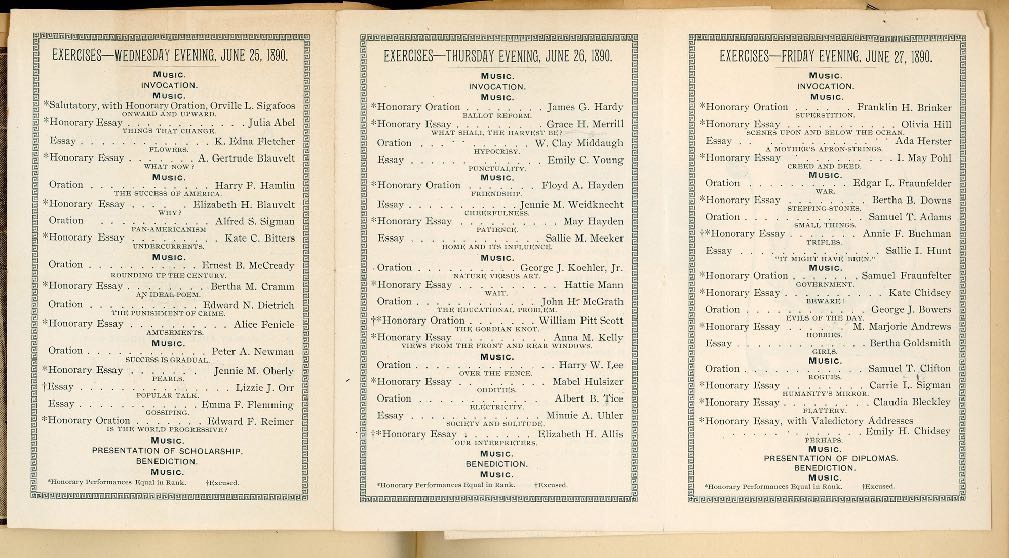
In June 1890, Orville graduated from Easton High School. The surviving commencement program lists him first on the opening evening, delivering the salutatory “Onward and Upward.” He went on to graduate from Lafayette College in 1894 and Union Theological Seminary in New York in 1897. College programs and professors’ recommendation letters preserved in Pearl’s scrapbook show his interest in speaking, writing and teaching. [3]
His speaking reached beyond a single congregation. A March 1899 letter from Florida Chautauqua superintendent J. Perry Worden praises two lectures, “The Evolution of a Century” and “The Power of Friendship.” Worden wanted him to return. The letter gives a glimpse of Orville as an engaging public lecturer, though it does not establish a recurring lecture tour. [5]
What sort of preacher was he?
Orville grew up Lutheran and was licensed to preach in 1896. While finishing seminary, he supplied the pulpit of the Reformed church at Hastings-on-Hudson. That temporary service became a permanent call in 1897. In March 1904, he moved to the Reformed church at Pompton Plains, New Jersey. [4]
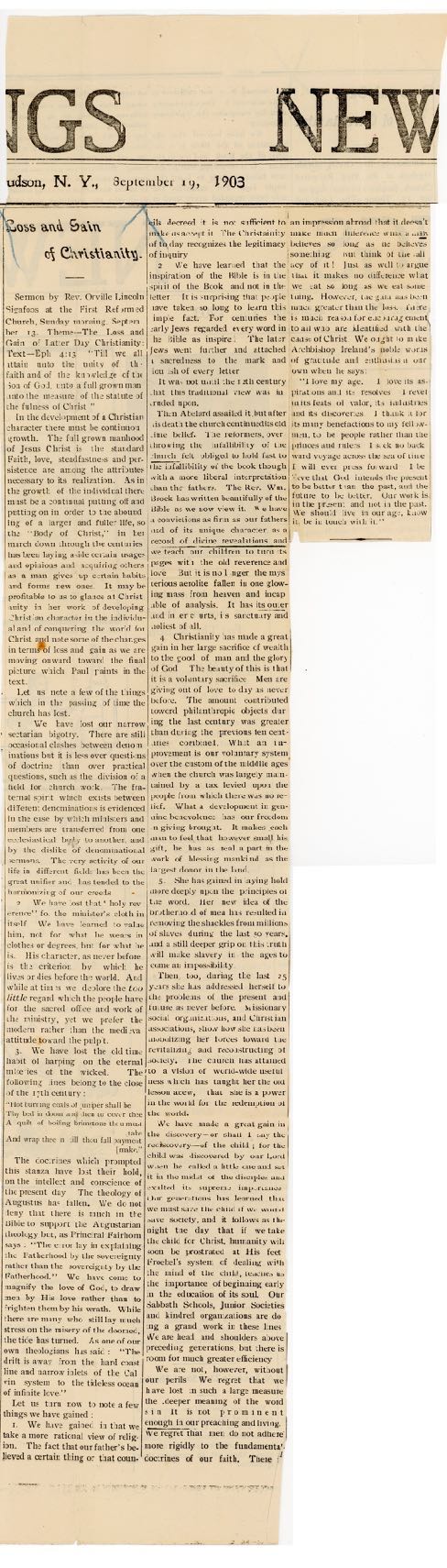
The sermons and articles Dale gathered let us hear more than a name and a denomination. In the newspaper account of his September 1903 sermon, “Loss and Gain of Christianity,” Orville welcomed cooperation across denominations and defended inquiry in religion. He understood biblical inspiration through the spirit of the book rather than every letter, and favored drawing people through God’s love over frightening them with punishment. He also warned against neglecting sin and Christian doctrine. These positions suggest a broad-minded Protestant minister whose faith remained central to his work. [8]
Education interested him in practical terms, too. In “Berea and Tuskegee,” published in 1902, he described visiting both institutions and reported speaking to 1,000 students at Tuskegee. He admired their work in making education available to young people with few opportunities. His writing also carries racial hierarchies and paternalistic assumptions: his openness across Christian denominations should not be mistaken for an absence of the prejudices of his time. [7]
The church at Pompton Plains
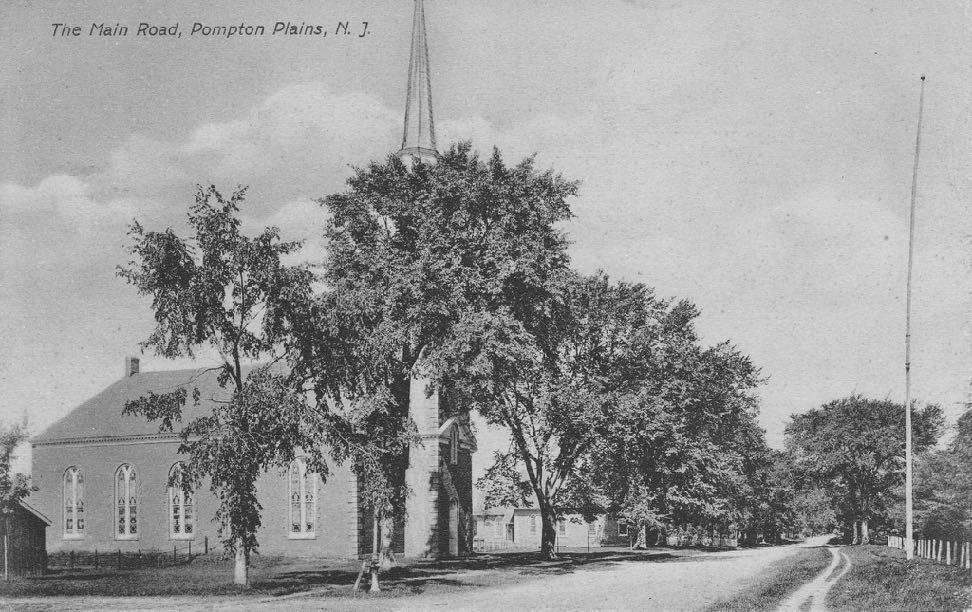
Dale included this view of the First Reformed Church at Pompton Plains, where Orville served from 1904 to 1910. He identifies the photograph as about 1908, during Orville’s pastorate, although the exact date is not established. The tall spire was a landmark; its tip is outside this photograph. [4] [11] [15]
The landscape reaches further back in Jasper Francis Cropsey’s Pompton Plains, New Jersey, painted in 1867. The Met’s collection record draws attention to the church steeple near the center of the horizon. Dale paired the painting with the church photograph and supplied an enlarged detail to help the family find the spire. [16] [15]
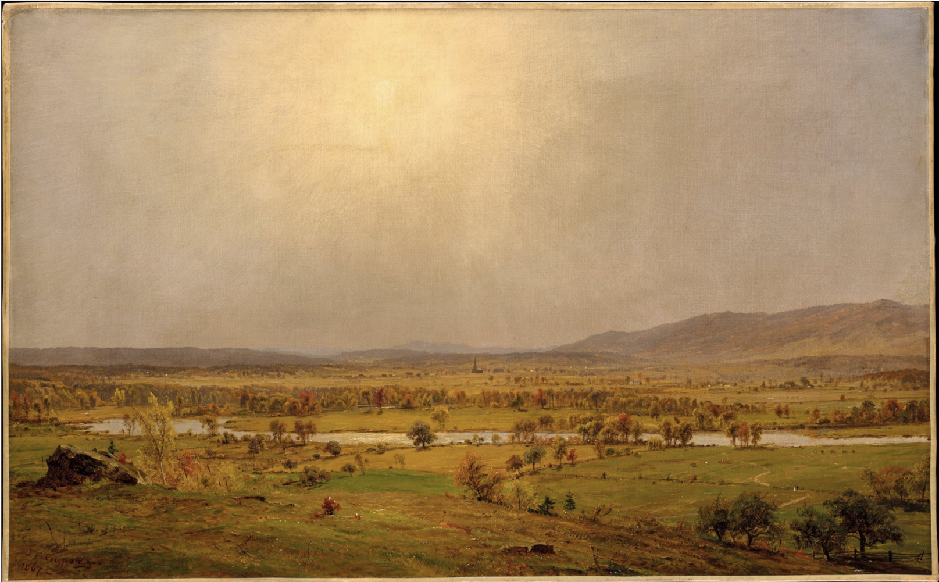
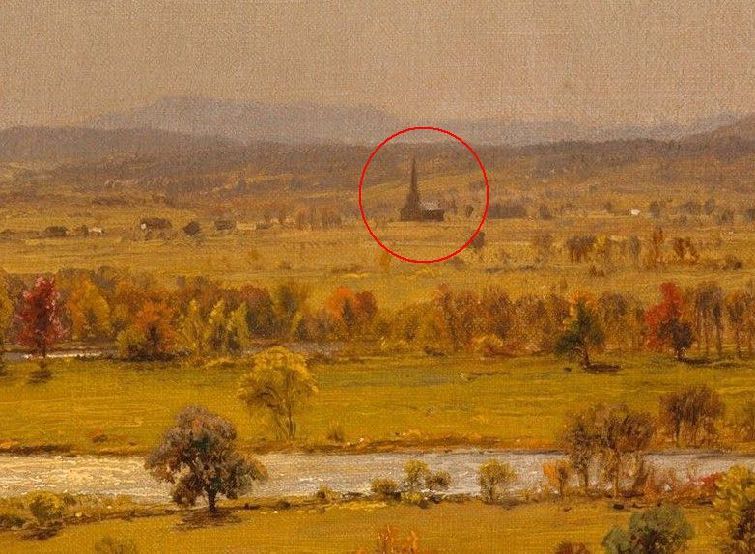
There is a personal connection as well: Dale describes Cropsey and his wife Maria as parishioners of Orville’s earlier church in Hastings-on-Hudson. His research brings the artist, the landscape and Orville’s two congregations into the same story. [15]
Pearl and a young family
On May 10, 1904, Orville married Pearl Meredith Leonard at Park Hill Reformed Church in Yonkers, with William P. Bruce officiating. The newspaper accounts are quite specific about the ceremony’s location. Pompton Plains, sometimes given as the wedding place in family data, was where the couple planned to make their home. Pearl wore her mother’s wedding veil; her sister Faye was maid of honor. [9]
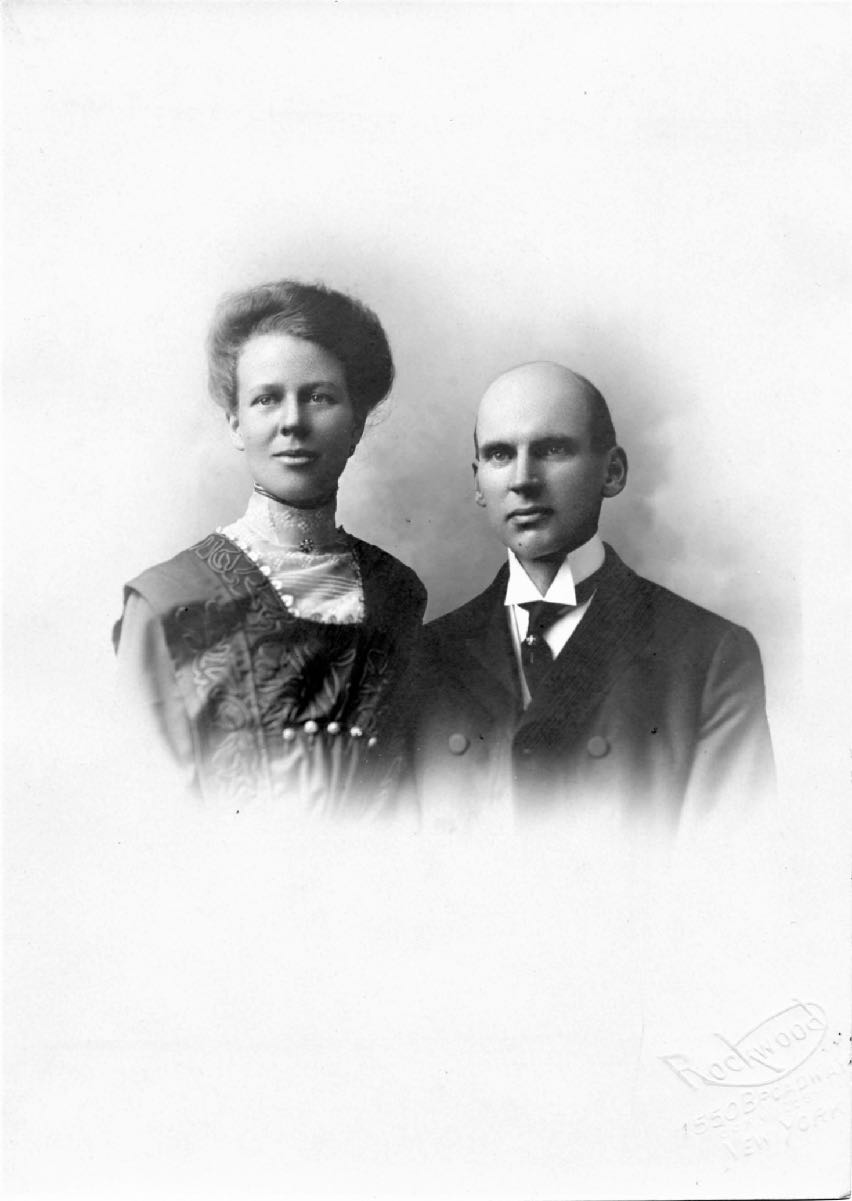
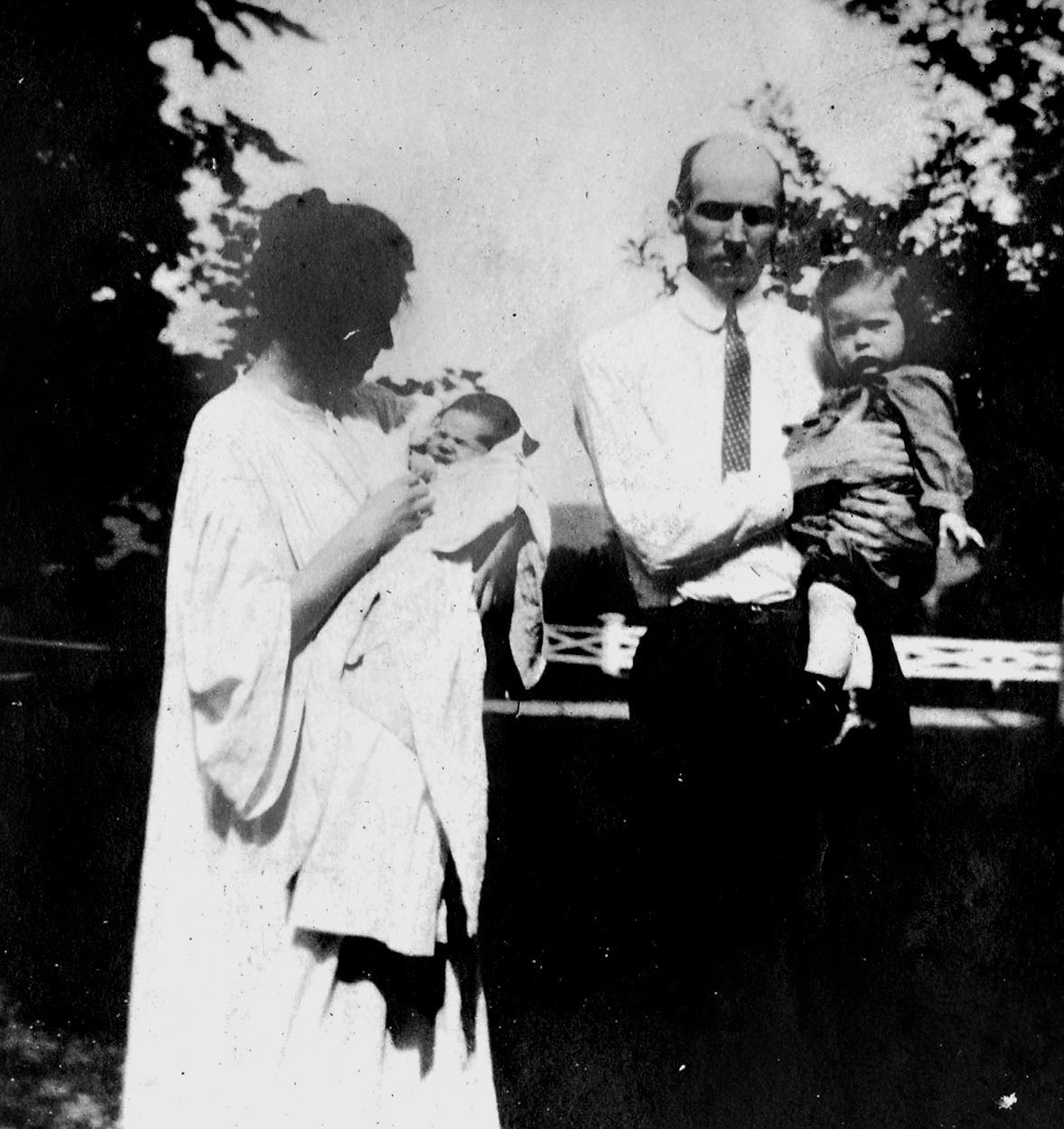
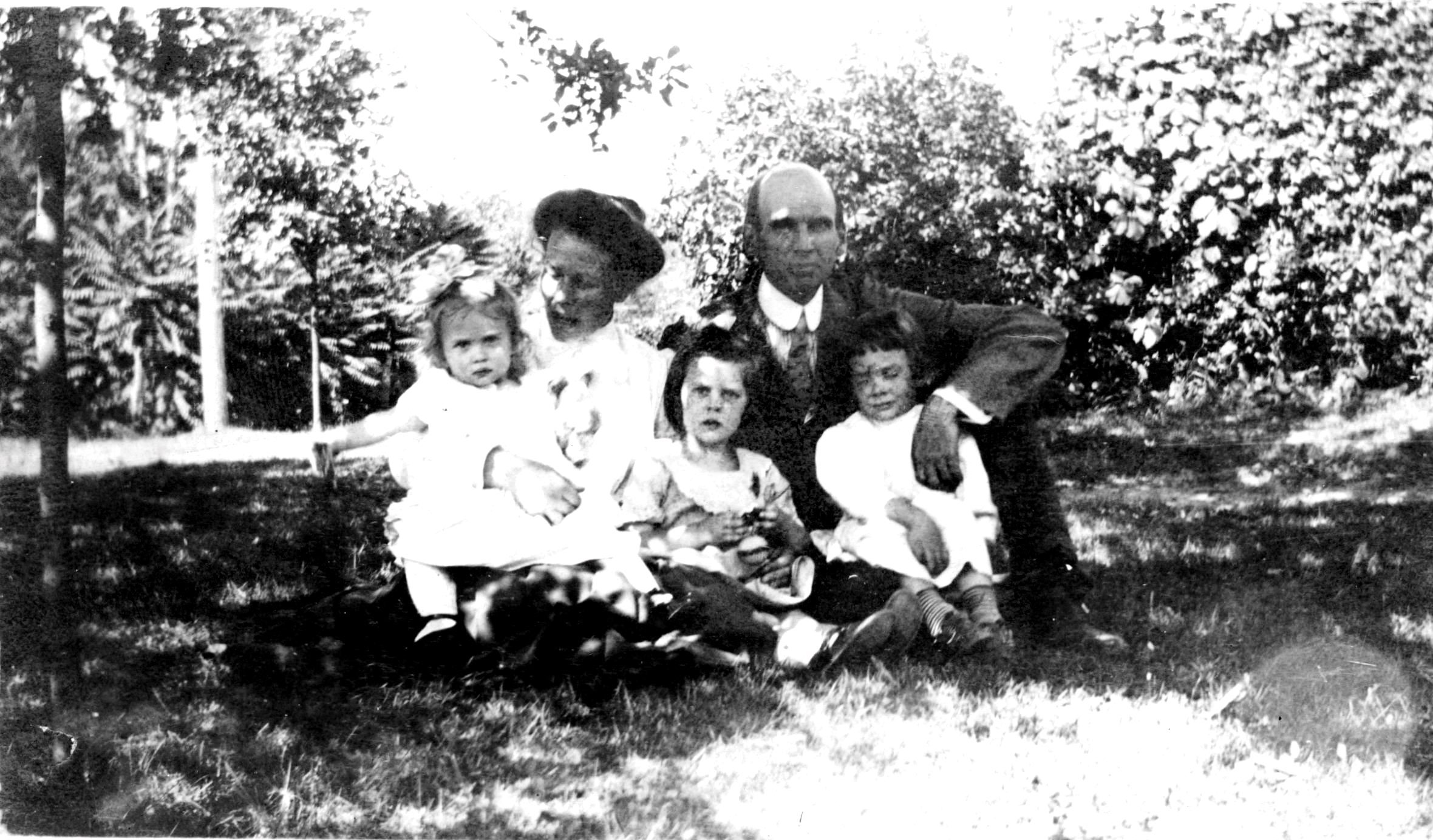
Three children followed: Lola in 1905, Orville Jr. in 1906, and Pearl in 1907. The album Pearl kept preserves a different view of the minister: a husband and father among children, porches, gardens and family outings. Dale’s identifications help put names to some of these faces, while other dates and places remain uncertain. [10]
A change of work, and a short life
In spring 1910, poor health led Orville to leave the Pompton Plains ministry. A contemporary church tribute records the dissolution of his pastoral relationship on April 12; the later church memorial places the end of his work on April 30. The tribute praises his faithfulness and sympathy for people across the parish. It does not establish a specific diagnosis. [11]
The memorial describes a brief period in Nutley, New Jersey, followed by work as an insurance examiner for Fidelity and Casualty, eventually based in Atlanta. The move gave his last years a different setting, but the surviving accounts suggest that a return to preaching was still a possibility. [11] [13]
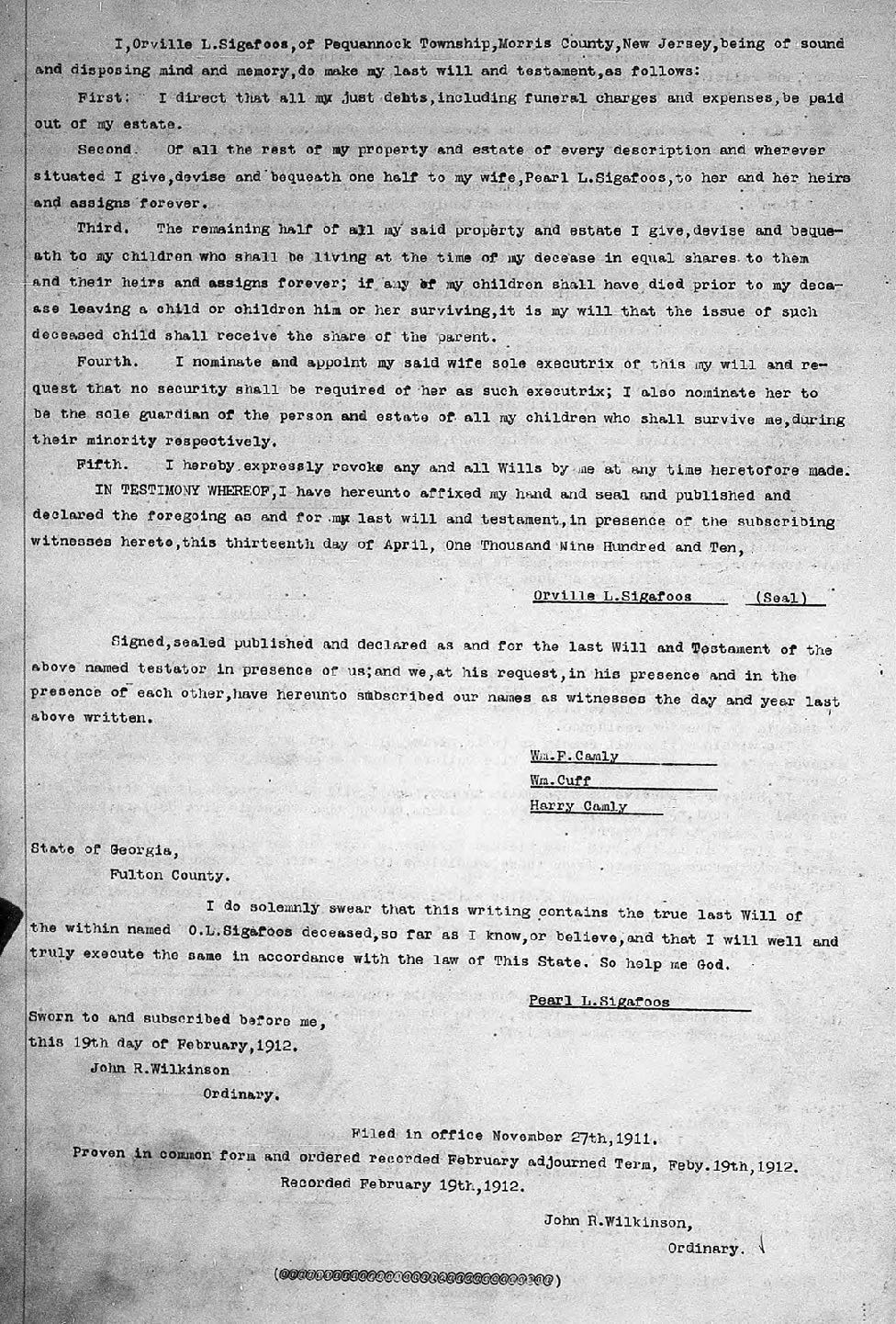
His will, dated April 13, 1910, placed family responsibilities in Pearl’s hands. It left half his estate to her and the other half to his surviving children, naming her executrix and guardian. Those are the will’s directions; the document alone does not show how every part of the estate was ultimately distributed. [12]
Orville died suddenly in Jacksonville, Florida, while away on insurance business in November 1911. He was 39. In a letter Dale preserved, Max E. Oberdorfer describes a pleasant evening together and the discovery of Orville’s death the next morning. The letter reports a physician’s opinion of cerebral hemorrhage. [13]
After an Atlanta funeral and temporary placement in a receiving vault, his body was brought north. The Pompton Plains funeral and burial took place on December 14. Pearl was left with three children, all under seven. [13]
What the records leave open
The exact day of his death remains unsettled. The November 17 letter describes finding him dead that morning, and the Atlanta report points to that date. The Lafayette notice and the later church memorial give November 16. Until a death registration or further evidence resolves it, both dates belong in the account. [13]
There are other reasons to read the sources together. A later memorial gives an impossible age for his high-school graduation, and its attribution of his postgraduate degrees differs from the university named on a surviving doctorate diploma. Those details need further investigation rather than confident repetition. [3] [14]
What survives most vividly is the range of the life: an orphaned child remembered with tenderness, a student and speaker, a working pastor, and a father among his young family. Pearl preserved the pieces. Dale Connelly brought them together and made them available to the family. This page owes its substance to their care.
The evidence behind the story
Sources & acknowledgments
The family material on this page comes through Dale Connelly’s research collection, shared in November 2026: his 104-page Orville Lincoln Sigafoos biography, his 69-page scan of Pearl’s scrapbook, and his 49-page scan of her photo album. Page numbers below count PDF pages from the cover, rather than handwritten scrapbook numbers. The sources overlap; a clipping reproduced in two PDFs is still one piece of evidence. Newspaper reports, autobiographical memories and later church histories are identified as such. The Met’s collection record is cited separately for the painting’s attribution.
Birth and baptism certificate
The certificate records a June 21, 1872 birth in Nockamixon Township, Bucks County, Pennsylvania, to Samuel Sigafoos and Sarah, and a March 2, 1873 baptism. Printed by Theo. F. Scheffer. Reproduced in Dale Connelly, Orville Lincoln Sigafoos (November 2026), p. 2. This is a family-held certificate image, rather than a newly obtained civil registration.
View the source image →Dale Connelly's reconstruction of Orville's childhood
Connelly, pp. 3–11, brings together church-register excerpts, census material and Bucks County Orphans’ Court testimony. Mary Lippincott’s testimony identifies her as his father’s sister; John L. DuBois was the appointed guardian. The report is a compiled reconstruction, with selected images and quotations from earlier records. Its September/October references to Samuel’s 1877 death remain inconsistent.
Easton High School, Lafayette College and Union Theological Seminary
The June 25–27, 1890 Easton High School program and May 1894 Lafayette recommendation letters survive in Pearl’s scrapbook, pp. 18–20 and 61–63. Connelly reproduces education material on pp. 13–16. A contemporary profile in the 1900 church-anniversary account supplies the 1894 Lafayette and 1897 Union graduations (Connelly, p. 25). The later memorial’s claim that he finished high school at twelve conflicts with his birth date and the dated program.
View the source image →The Hastings pastorate and the move to Pompton Plains
The Christian Intelligencer, December 31, 1900, semi-centenary report and profile, reproduced in Connelly, pp. 19–25. It identifies his Lutheran background, 1896 licensure, temporary service and 1897 permanent call. The historical sermon dates his relationship with the church to October 1, 1896. Farewell coverage reproduced on pp. 52–69 places the move to Pompton Plains in March 1904.
A testimonial from the Florida Chautauqua
J. Perry Worden, superintendent, letter dated March 5, 1899, DeFuniak Springs, Florida. It praises The Evolution of a Century and The Power of Friendship. Pearl’s scrapbook, p. 64; reproduced with a transcription in Connelly, p. 18.
Orville's own memories of childhood
Orville Lincoln Sigafoos, The Memories of Childhood, dated Hastings-on-Hudson, July 28, 1902; publication unidentified. Clipping in Pearl’s scrapbook, p. 14; scan and transcription in Connelly, pp. 40–44. This is an adult’s recollection. The girl cousin is unnamed in the original text; her proposed identity remains uncertain.
Berea and Tuskegee
Orville Lincoln Sigafoos, Berea and Tuskegee, The Christian Intelligencer, April 12, 1902; clipping and transcription in Connelly, pp. 31–34. The visit and audience size are his own account. His reported March 1903 address on southern mountain communities appears on pp. 45–46. These texts also preserve his racial and paternalistic assumptions.
Loss and Gain of Christianity
Sermon delivered September 13, 1903, reported in The Hastings News, September 19, 1903. Clipping and Google Docs transcription gathered by Dale Connelly, pp. 47–51. The narrative paraphrases the reported sermon; the newspaper account is not a recording or a verified verbatim manuscript.
View the source image →The May 10, 1904 wedding
The New York Times, May 11, 1904, Yonkers dispatch dated May 10, and an unattributed wedding account preserved in Pearl’s scrapbook, p. 16. Both place the ceremony at Park Hill Reformed Church, Yonkers. Connelly, pp. 70–72, reproduces the reports. The family tree’s older Pompton Plains wedding-place entry refers to their intended home rather than the ceremony described in these accounts.
Pearl's photographs, preserved and scanned by Dale Connelly
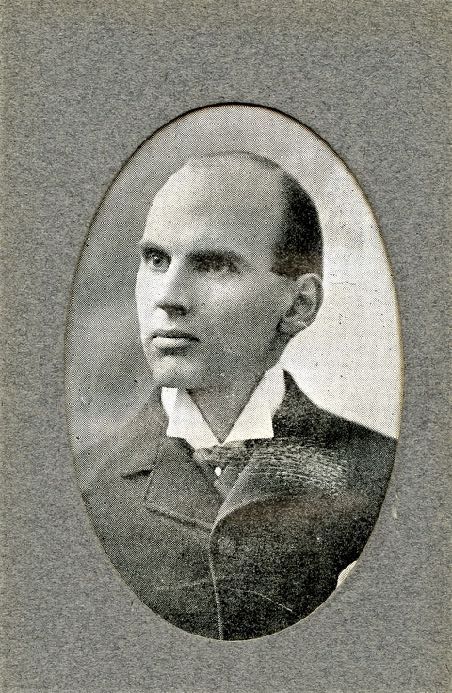
Pearl Meredith Leonard Sigafoos Family Photo Album, p. 1 (couple portrait) and p. 7 (family outdoors); Dale Connelly’s biography, pp. 1 and 4 (Orville portraits) and p. 73 (family photographs and his identifications). The 1906 date follows Dale’s caption. The larger family group’s date and location are uncertain; Dale suggests it could be Atlanta around 1910. No wedding date is assigned to the couple’s portrait.
View the source image →Leaving the ministry and entering insurance work
Classis tribute, The Christian Intelligencer, May 4, 1910, reproduced in Connelly, pp. 85–86; it dates dissolution of the pastoral relationship to April 12 and describes physical infirmity. The 1936 Anniversary Memorial, First Reformed Church, Pompton Plains, printed p. 156 (Connelly, p. 92), gives April 30 as the end of his work, then describes Nutley, Fidelity and Casualty, and the move to Atlanta. A governing decision and a final working date need not be the same event. His chronic diagnosis is not established.
Will of April 13, 1910, and later probate statements
Will of Orville L. Sigafoos, Pequannock Township, Morris County, New Jersey. Image and simplified transcription in Connelly, pp. 103–104. The reproduced page includes Pearl’s February 19, 1912 sworn statement and recording details. The will’s directions do not by themselves establish the eventual distribution of the estate.
View the source image →Final illness, conflicting death dates, and the journey north
Typed Max E. Oberdorfer letter to Eugene Oberdorfer, November 17, 1911 (Connelly, pp. 96–98); Atlanta Georgian, November 22, 1911; Lafayette notice, December 12, 1911; Yonkers Statesman, December 15, 1911 (Connelly, pp. 100–102); and the 1936 memorial (Connelly, p. 92). The letter describes discovery that morning and reports a physician’s opinion of cerebral hemorrhage. Its Jacksonville, Alabama dateline conflicts with the Florida location in the other accounts; Dale suspects a typing error. The letter and Atlanta report favor November 17, while the Lafayette notice and memorial give November 16. No death certificate has been checked. The Atlanta receiving vault and later December 14 Pompton Plains funeral and burial describe successive stages, not two final burial places.
A postgraduate degree question
The 1936 memorial credits postgraduate degrees to Columbia and New York universities (Connelly, p. 91). A surviving Doctor of Philosophy diploma names American Temperance University, Harriman, Tennessee (Pearl’s scrapbook, p. 68). That discrepancy calls for institutional records; this page does not assign the doctorate to Columbia or NYU or rule out additional study.
Pompton Plains church photograph and the highlighted spire
Dale Connelly, Orville Lincoln Sigafoos (November 2026), pp. 93–95. Dale identifies the church photograph as circa 1908; its photographer and exact date are not established. He places the church beside Cropsey’s landscape and includes the enlarged detail with its existing red circle. On p. 95 he also describes Jasper and Maria Cropsey as parishioners of Orville’s earlier Hastings-on-Hudson church. These family connections are attributed to Dale’s account.
View the source image →Jasper Francis Cropsey, Pompton Plains, New Jersey, 1867
The Metropolitan Museum of Art, collection record 25.110.22, identifies the artist, title, 1867 date, oil-on-canvas medium, public-domain status and credit line: Bequest of Collis P. Huntington, 1900. The museum’s description points out the church steeple near the center of the horizon. The reproduction shown here comes from Dale Connelly’s biography, p. 94.
View the source image →
With deep thanks to Dale Connelly, whose patient research, scanning and sharing brought these records together, and to Pearl Meredith Leonard Sigafoos, who preserved so much of the family’s history. Photograph identifications and approximate dates follow Dale’s notes unless stated otherwise.